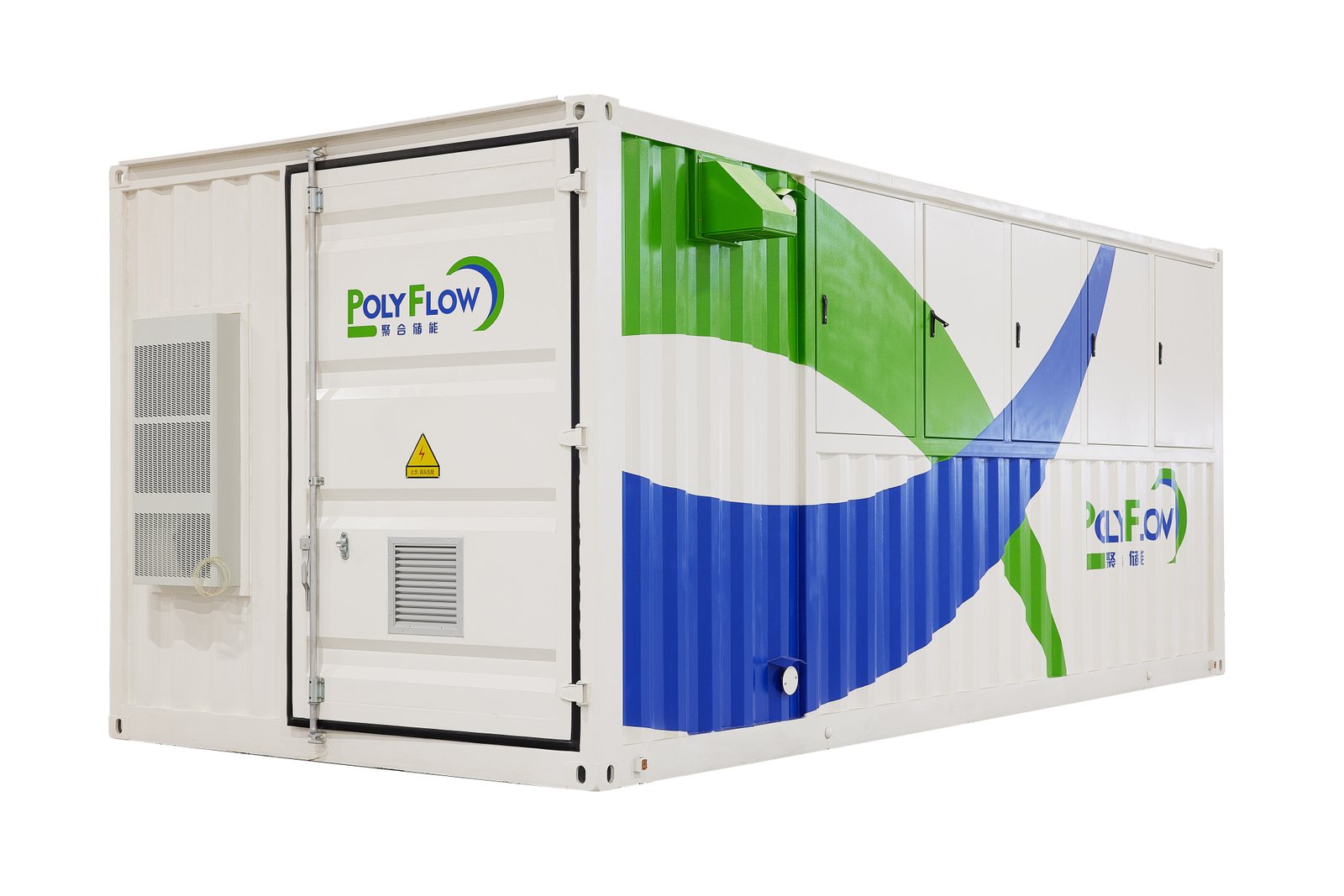
Lithium-ion batteries (Li-ion) and vanadium redox flow batteries (VRFBs) are both important energy storage technologies, but they differ significantly in various aspects. Here’s a comprehensive comparison highlighting the advantages of vanadium redox flow batteries:
- Energy Storage Capacity and Scalability:
- Vanadium Redox Flow Batteries (VRFBs): VRFBs offer virtually unlimited scalability. Their energy storage capacity can be easily increased by adding more electrolyte, making them suitable for large-scale energy storage applications, such as grid storage.
- Lithium-Ion Batteries: Li-ion batteries are generally limited by their physical size and energy density. While they can be scaled up, the process is more complex and costly compared to VRFBs.
- Cycle Life and Durability:
- VRFBs: Vanadium flow batteries have a significantly longer cycle life compared to lithium-ion batteries, often exceeding 10,000 cycles with minimal degradation. This makes VRFBs ideal for applications where long-term performance and durability are critical, such as grid storage and renewable energy integration.
- Lithium-Ion Batteries: Li-ion batteries typically last around 2,000 to 5,000 cycles before their capacity starts to degrade, making them less suitable for long-term, large-scale applications.
- Safety:
- VRFBs: Vanadium flow batteries are inherently safer due to their non-flammable electrolyte solution and the fact that they operate at low temperatures. This reduces the risk of fires or thermal runaway, which are concerns with lithium-ion batteries.
- Lithium-Ion Batteries: Li-ion batteries can be prone to thermal runaway, especially if damaged, overcharged, or improperly handled, leading to fires or explosions in extreme cases.
- Environmental Impact and Sustainability:
- VRFBs: Vanadium flow batteries are made from abundant and non-toxic materials. The vanadium used in these batteries is recyclable, and the electrolyte can be reused, which makes VRFBs a more sustainable and environmentally friendly option in the long term.
- Lithium-Ion Batteries: Lithium-ion batteries use materials like lithium, cobalt, and nickel, which can have significant environmental and human rights impacts during mining. Recycling of Li-ion batteries is also more complex and less efficient compared to VRFBs.
- Efficiency and Performance:
- VRFBs: VRFBs have a round-trip efficiency of around 70-80%. Although lower than Li-ion batteries, their performance remains stable over time due to their modular design and ability to operate under varying conditions without major performance degradation.
- Lithium-Ion Batteries: Li-ion batteries have higher round-trip efficiencies, typically around 85-95%. However, their performance can degrade over time, particularly with frequent deep discharge cycles.
- Temperature Tolerance:
- VRFBs: These batteries can operate in a wide range of temperatures, from -10°C to 50°C, without significant performance losses, making them suitable for diverse climates and environments.
- Lithium-Ion Batteries: Li-ion batteries are sensitive to temperature extremes and generally perform best within a narrower temperature range (0°C to 40°C). Extreme temperatures can cause damage and reduce lifespan.
- Energy Density:
- VRFBs: While VRFBs have a lower energy density compared to Li-ion batteries, they compensate for this by offering larger storage capacities that can be tailored to specific needs.
- Lithium-Ion Batteries: Li-ion batteries have higher energy densities, which makes them ideal for applications requiring compact and lightweight energy storage, such as portable electronics and electric vehicles.
Conclusion: Vanadium redox flow batteries stand out primarily for their scalability, long cycle life, safety, and sustainability. While lithium-ion batteries are superior in terms of energy density and are well-suited for compact applications like electric vehicles, VRFBs offer significant advantages for large-scale energy storage systems, especially in applications like grid storage, where longevity, safety, and environmental impact are critical factors.
Polymer Energy is committed to becoming a global leading supplier of core components in the energy storage industry.